Mechanical Resistance
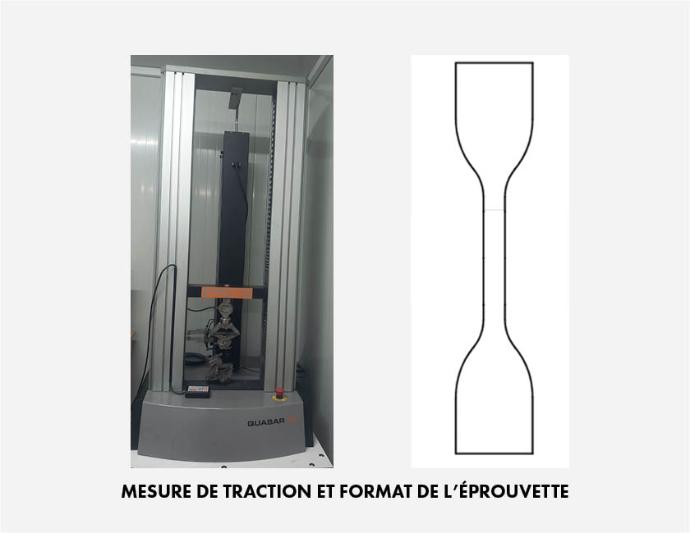
Tensile Test
A tensile test involves gradually applying a force to a test specimen in order to stretch it until it breaks.
Based on the measurements taken, the main mechanical properties are determined:
- Young's modulus at 5% strain
- Stress at 100% strain
- Tensile strength
- Elongation at break
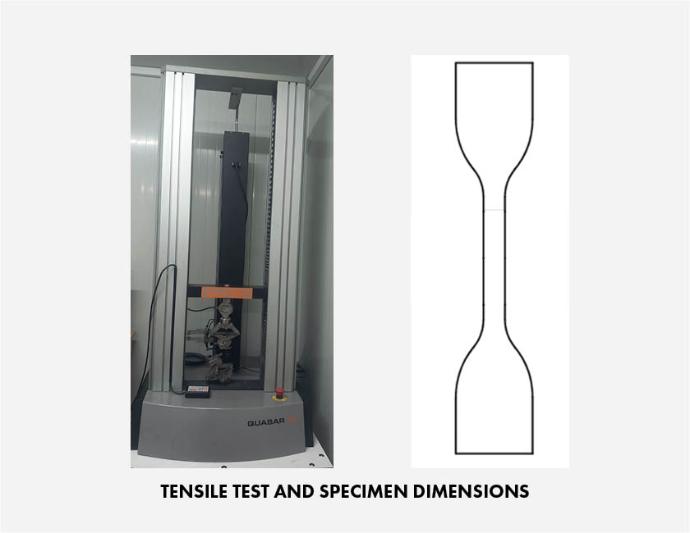
Tensile Test
A tensile test involves gradually applying a force to a test specimen in order to stretch it until it breaks.
Based on the measurements taken, the main mechanical properties are determined:
- Young's modulus at 5% strain
- Stress at 100% strain
- Tensile strength
- Elongation at break
Tear Resistance
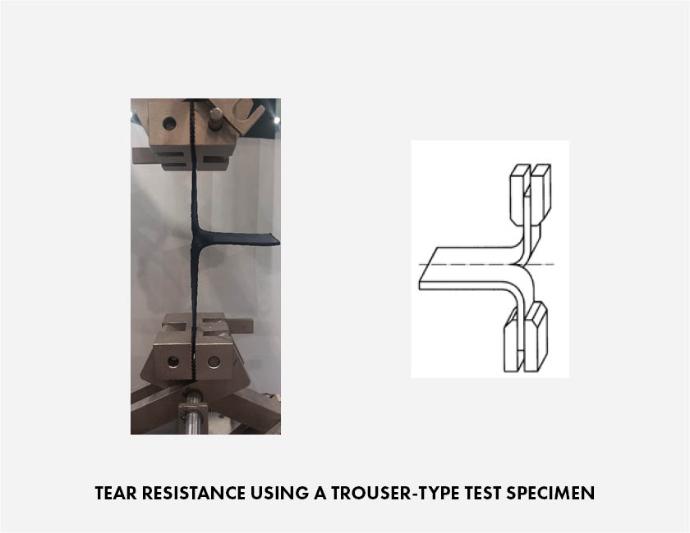
This test measures the force required to propagate a tear in the material, in order to assess its tear resistance.
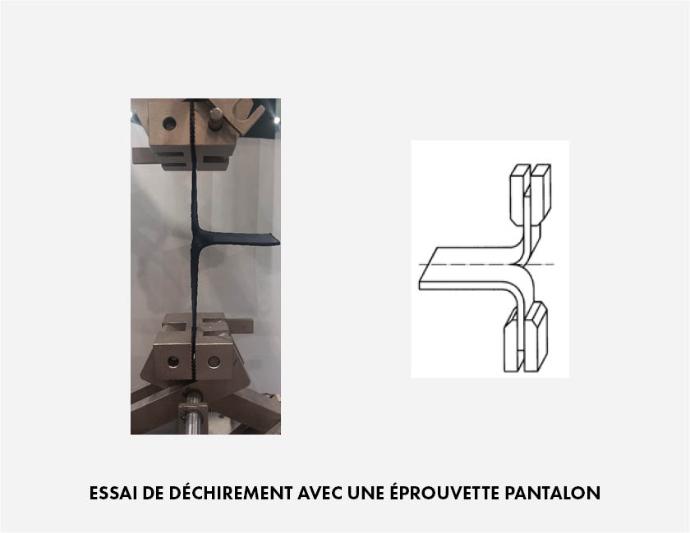
Tear Resistance
This test measures the force required to propagate a tear in the material, in order to assess its tear resistance.
Abrasion Resistance
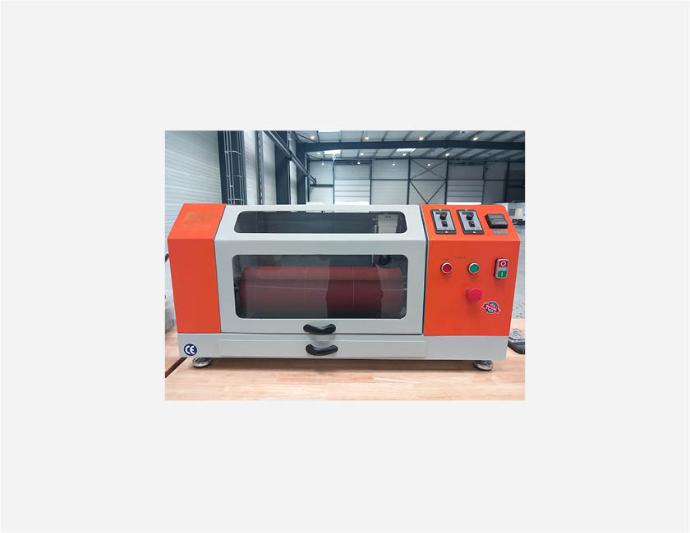
Abrasion resistance refers to a material’s surface’s ability to resist wear caused by repeated friction.
The test involves determining the volume lost from a cylindrical TPE test specimen as a result of the abrasive action caused by the specimen rubbing against an abrasive sheet.
The lower the volume of material loss, the better the abrasion resistance.
Elasticity and shape tests
DRC: Compression Set
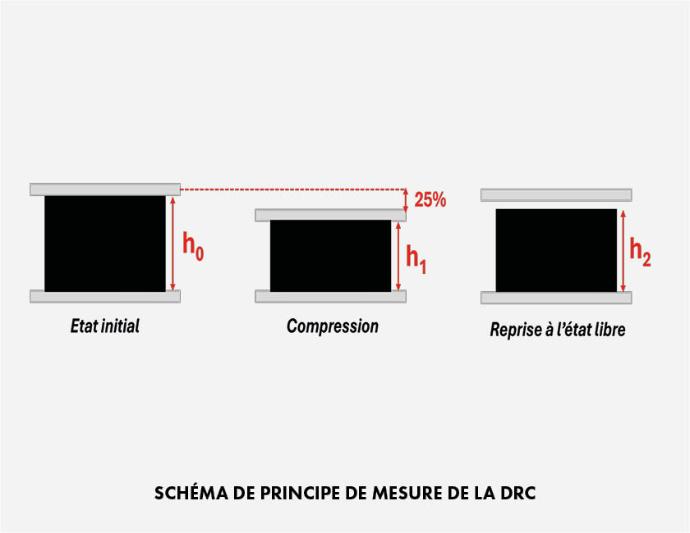
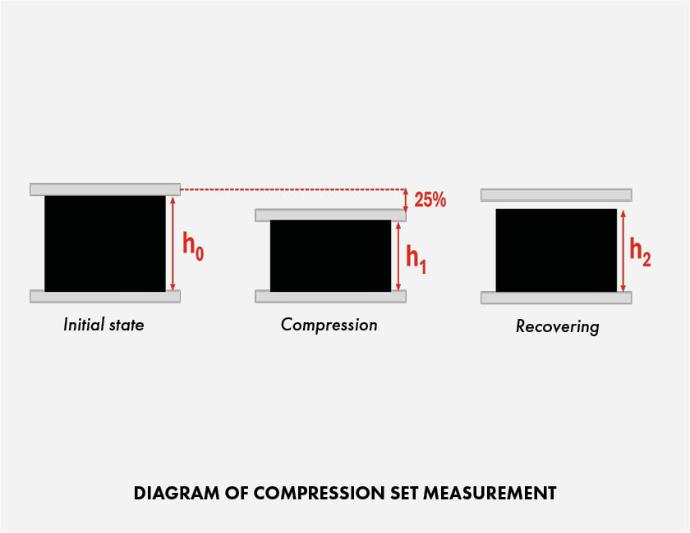
This test is used to characterise the elastic properties of TPE, in particular their ability to deform under compression and then return to their original shape.
The lower the DRC value, the better the TPE returns to its initial position.
DRC: Compression Set
This test is used to characterise the elastic properties of TPE, in particular their ability to deform under compression and then return to their original shape.
The lower the DRC value, the better the TPE returns to its initial position.
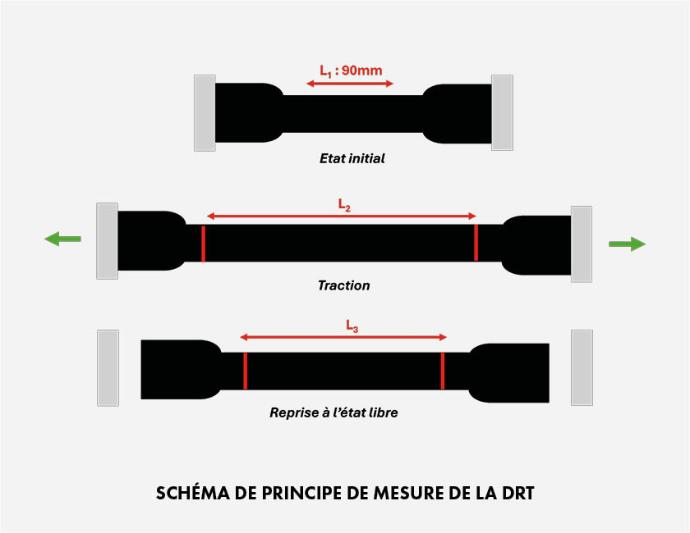
DRT: Tensile Permanent Deformation
This test is used to characterise the elastic properties of TPE, in particular their ability to deform under tension and then return to their original shape.
Tests can be carried out at different temperatures, as required.
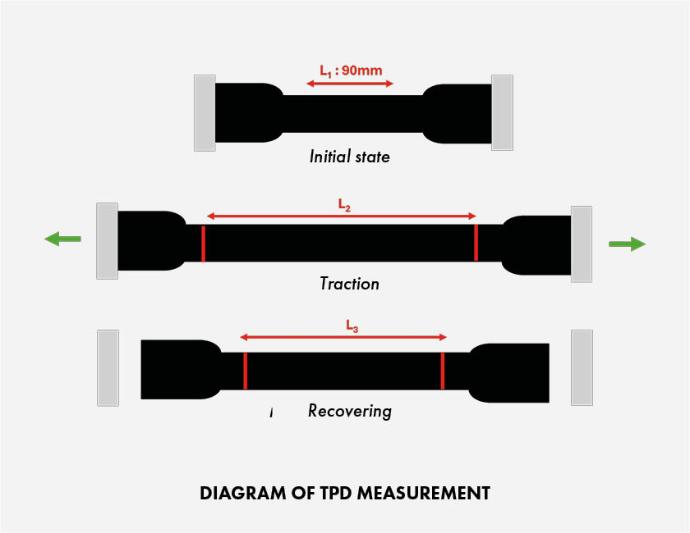
DRT: Tensile Permanent Deformation
This test is used to characterise the elastic properties of TPE, in particular their ability to deform under tension and then return to their original shape.
Tests can be carried out at different temperatures, as required.
Hardness
The hardness of a material refers to its ability to resist penetration when a force is applied to its surface.
The hardness of ELASTEVER TPEs ranges from 50 Shore A for the softest grades to 90 Shore A for the stiffest.
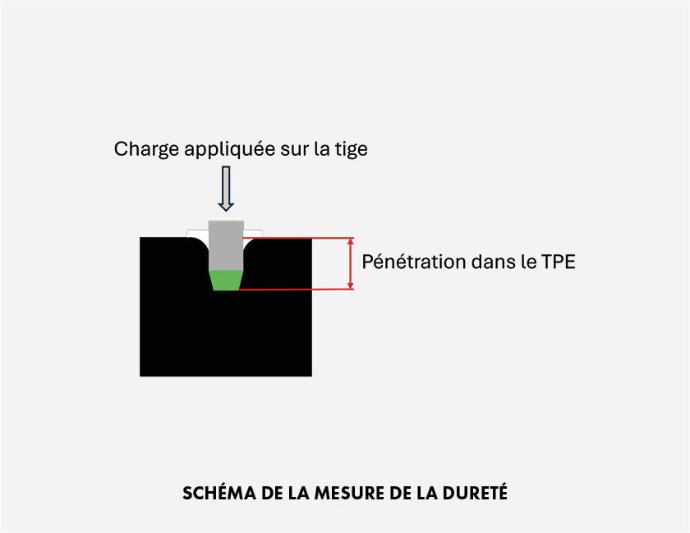
Hardness
The hardness of a material refers to its ability to resist penetration when a force is applied to its surface.
The hardness of ELASTEVER TPEs ranges from 50 Shore A for the softest grades to 90 Shore A for the stiffest.
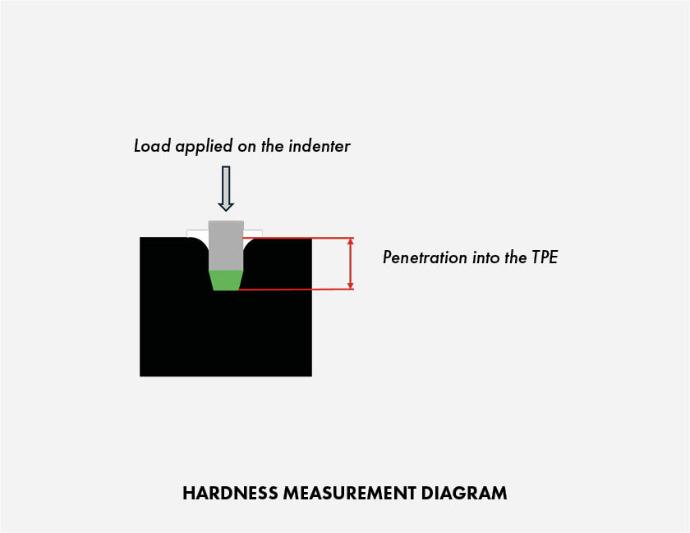
Density
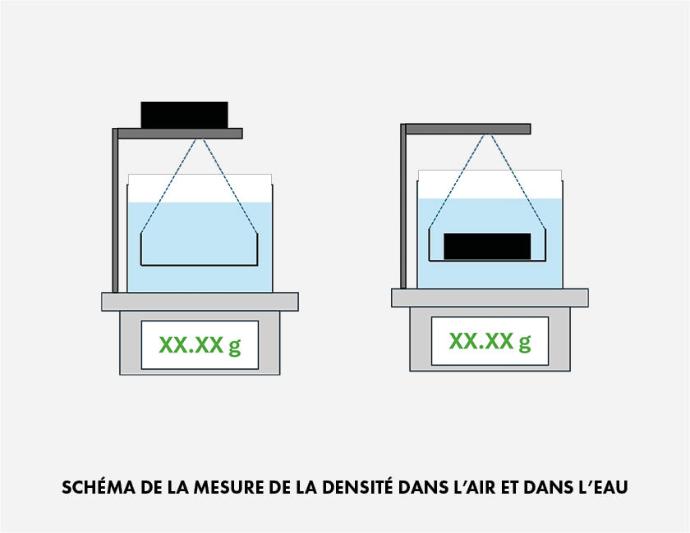
The density of a material is the ratio of its mass per unit volume to the mass of water. Density has no unit.
To measure it, weigh a sample out of the water, submerge it in the water, and then weigh the sample again whilst it is in the water.
Density
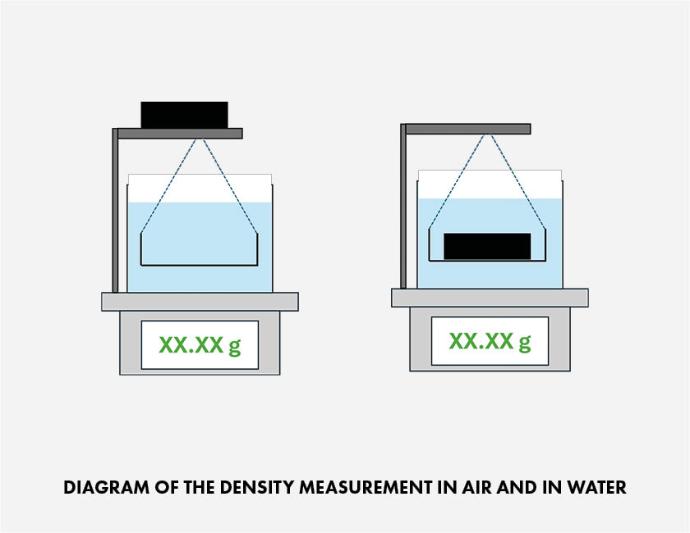
The density of a material is the ratio of its mass per unit volume to the mass of water. Density has no unit.
To measure it, weigh a sample out of the water, submerge it in the water, and then weigh the sample again whilst it is in the water.
MFI: Melt Flow Index
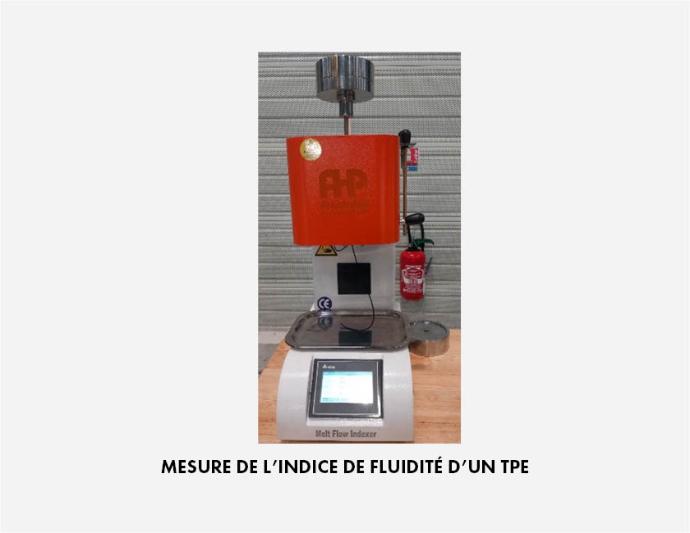
The test involves extruding molten TPE pellets through a standard die using a piston moving within a heated cylinder.
Extruded samples are taken at regular intervals and then weighed. A high MFI value indicates that the molten material is more fluid.
MFI: Melt Flow Index
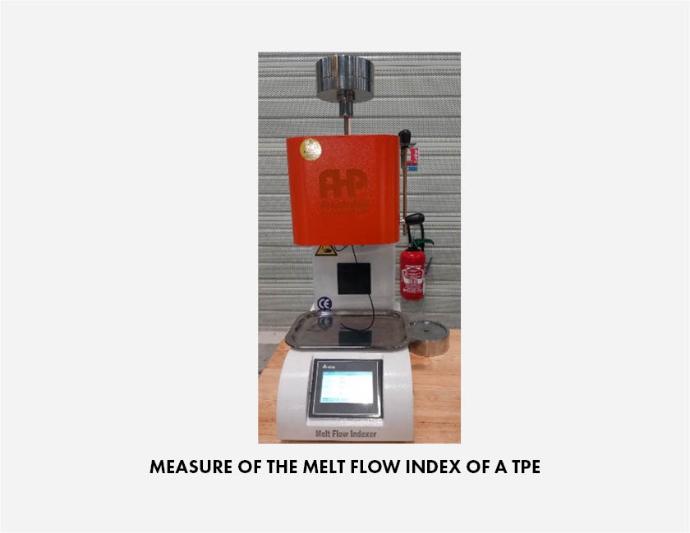
The test involves extruding molten TPE pellets through a standard die using a piston moving within a heated cylinder.
Extruded samples are taken at regular intervals and then weighed. A high MFI value indicates that the molten material is more fluid.
Reliability and Durability
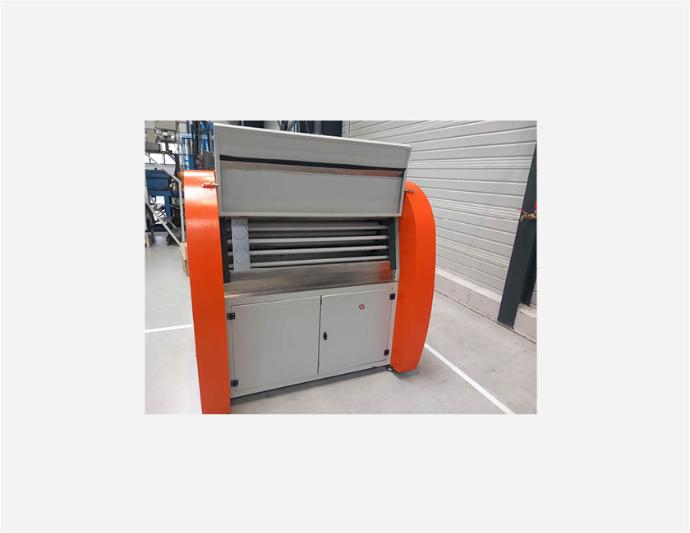
Accelerated Aging
The sample is exposed for several days to intense UV radiation and high humidity, in order to accelerate the natural ageing process of the material and assess how its properties change or deteriorate over time.
This test is used to estimate the service life of a material.
Infrared Analysis
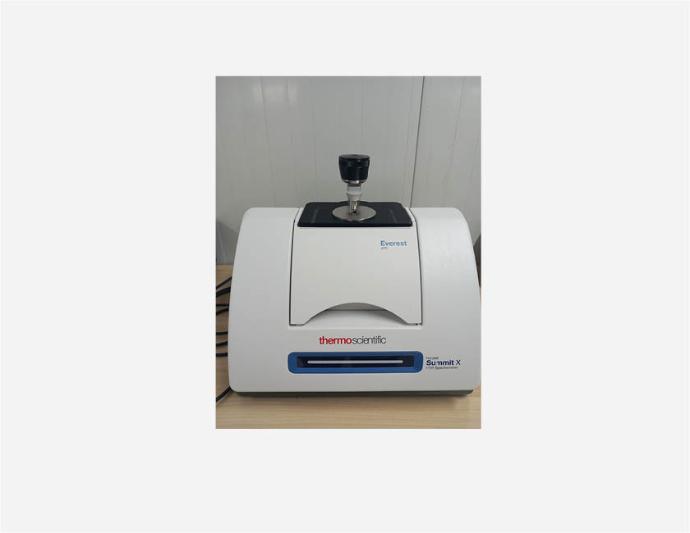
Infrared analysis is a technique used to identify the chemical composition of a material by analysing the way it absorbs infrared radiation.
It enables the identification of material components and thus facilitates quality control at both the incoming and outgoing stages.